BPI Review Highlights Crop Innovations for Food Security

As farmers across the country face challenges from climate change, pests, and rising production costs, agricultural researchers continue to search for solutions that can help secure the nation’s food supply. In Los Baños, Laguna, scientists and agriculture experts recently gathered to showcase innovations aimed at improving crop productivity and strengthening food security.
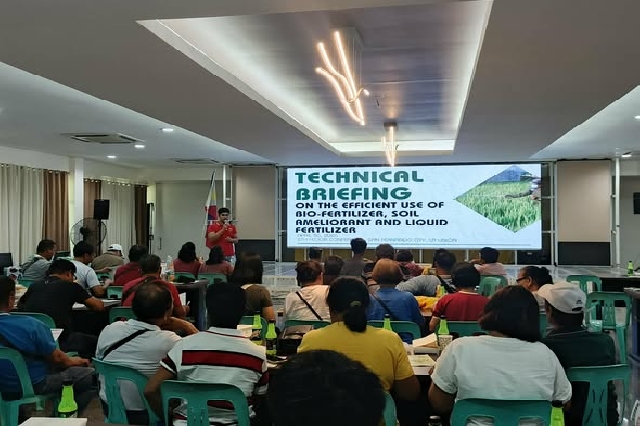
The Department of Agriculture’s Bureau of Plant Industry–Los Baños National Crop Research, Development and Production Support Center (DA BPI-LBNCRDPSC) successfully concluded its Annual Research and Development Pre-In-House Review on June 3, 2026. The event highlighted research projects focused on developing better crop varieties, improving farming practices, and helping communities become more resilient to disasters.
One of the top-performing studies was the project titled “Development of Pilot Villages Through the Establishment of Protective Cultivation and Postharvest Management of Vegetables in the Philippines,” which won First Place for Best Research and Development Paper. The project demonstrated the successful establishment of KOPIA Pilot Villages in Siniloan, Laguna, and Lucban, Quezon.
The initiative introduced protective cultivation technologies and improved postharvest management systems to vegetable farmers. These innovations aim to reduce crop losses, improve product quality, and help farmers produce safer and more marketable vegetables. By using protective structures and better handling practices, farmers can also minimize the effects of extreme weather conditions and pests.
Another notable project, “SAFE: S&T Interventions to Improve Quick Response to Calamities and Natural Disasters in CALABARZON, MIMAROPA, and Bicol Region,” received Second Place for Best Research and Development Paper. The project focuses on strengthening disaster preparedness and recovery efforts by facilitating the rapid distribution of vegetable planting materials and other agricultural support following natural disasters.
Researchers also presented studies on varietal improvement for important crops such as mungbean, tomato, eggplant, and pole sitao. The pole sitao research earned Third Place for Best Research and Development Paper. These studies aim to develop crop varieties with higher yields, better quality, and improved resistance to environmental stresses, helping farmers increase productivity and income.
The review also featured initiatives designed to expand agricultural innovation and community participation. Among them was the project “Upscaling Adoption of S&S Plaza Innovation Towards SciCAT Farm Replication,” which seeks to replicate the successful S&S Plaza SciCAT Farm model in various local government units. The project promotes agritourism and demonstrates modern farming technologies that can be adopted by local communities.
Recognizing the importance of attracting younger generations to agriculture, researchers also presented the AgriYouth Project and Agri-Skills 101 Project. These programs focus on engaging and empowering young people through agricultural awareness campaigns, gardening activities, skills training, and leadership development. The initiatives aim to inspire future agricultural leaders and encourage greater youth participation in the sector.
Additional presentations included newly approved projects funded by the Department of Science and Technology–Philippine Council for Agriculture, Aquatic and Natural Resources Research and Development (DOST-PCAARRD). These projects focus on the utilization of indigenous vegetables and strengthening rapid-response measures during crises and natural calamities.
Experts from DOST-PCAARRD, the Southern Tagalog Agriculture, Aquatic and Resources Research, Development and Extension Consortium, the University of the Philippines Los Baños, and the Bureau of Plant Industry Central Office served as evaluators. They provided recommendations to further strengthen ongoing and future research initiatives.
The annual review underscored the critical role of research and innovation in addressing the challenges facing Philippine agriculture. Through improved crop varieties, climate-resilient technologies, and community-based programs, the Bureau of Plant Industry continues to support sustainable agricultural development and national food security.
As the country works toward a more resilient food system, these research efforts offer hope for farmers, consumers, and future generations who depend on a strong and productive agriculture sector.
Pwersa Balita – Your Trusted Source in Agri News
#FoodSecurity #CropInnovation #BPI #AgriculturalResearch #PwersaBalita
-
 PhilRice Camp Teaches Kids Rice Value in Nueva Ecija
-
 Cantilan Adopts High-Zinc Rice to Boost Nutrition
-
 DA Reviews Bioethanol Policy to Include Corn Feedstock
-
 NMIS Prepares Webinar on Meat Safety and Consumer Protection
-
 BFAR Trains Staff on Sustainable Marine Fish Farming
-
 ATI Reviews Key Farm Programs to Better Serve Farmers
-
 PhilFIDA Trains Antique Weavers in Abaca Bag Making
-
 NFA Inspects Mindanao Facilities After Strong Quake
-
 Philippine Delegates Join China-ASEAN Agri Standards Training
-
 NDA Seeks P140.5-M Fund to Digitize Dairy Services
-
 DA Composting Project Helps Owan's Farm Boost Harvests
-
 BAI Honored at Clark Airport for Service Excellence
-
 BAFE Marks 13 Years Advancing Modern Philippine Agriculture
-
 Philippines Leads ASEAN Food Safety Talks in Quezon City
-
 NDA Marks World Milk Day with Nutrition Drive in Lipa
-
BALITA 54
-